

Care, Applied Consistently: Our Sustainable Farming Ethos
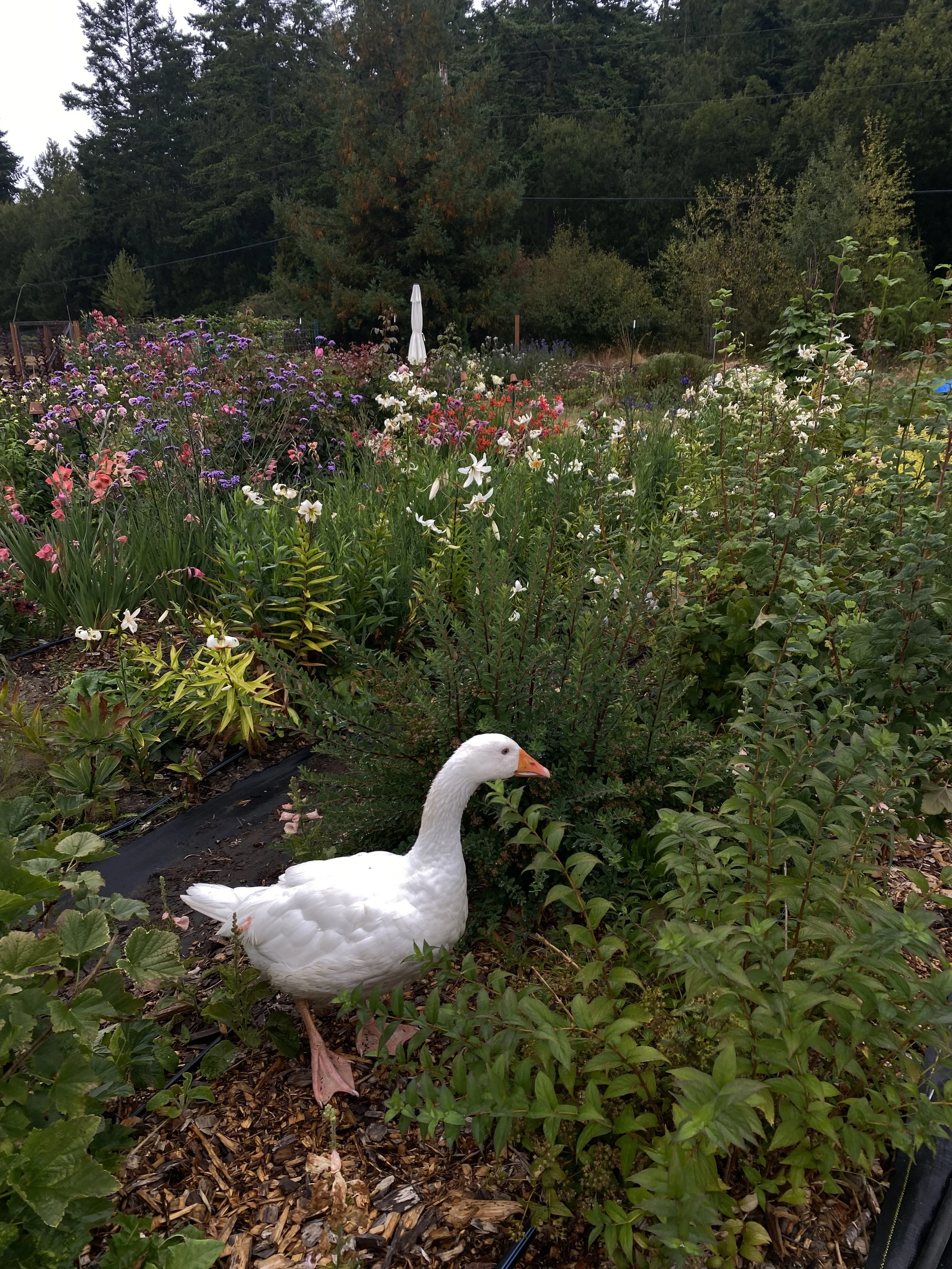
We farm in a time of climate change.
Agriculture is responsible for roughly a quarter of global greenhouse gas emissions. At the same time, soil is one of the planet’s largest carbon sinks. The way we farm can either release carbon — or store it.
We choose to store it.
The main way we do this is by disturbing the soil as little as possible. Tilling soil exposes carbon to the air; living roots in the soil returns carbon underground. Through low-till practices, we build organic matter year after year — increasing water retention, buffering floods, and strengthening drought resilience.
One percent more organic matter in soil can hold thousands of additional gallons of water per acre. In an era of heavier rains and longer dry spells, that matters.
We plant for permanence.
Our farm model is based around growing mostly perennial plants. These are plants that live many years (sometimes decades). Perennials anchor the land with deep roots that draw carbon down, reduce erosion, and require less irrigation once established. They endure heat waves and heavy rains better than shallow-rooted annual systems. Resilience begins below ground.
We grow with intention.
No invasive species. No chemical fertilizers. No synthetic pesticides. Ever.
Synthetic nitrogen fertilizers are energy-intensive to produce and contribute to nitrous oxide emissions — a greenhouse gas nearly 300 times more potent than carbon dioxide. We choose fertility built from compost, woodchips, seaweed, and manure. We choose living systems over industrial inputs.
We work with animals, not against nature.
Our ducks manage pests and fertilize as they forage. Our cat keeps rodents in balance. Nutrients cycle back into the soil. Waste becomes nourishment.
We reduce what we consume.
We minimize plastic. We buy used. We repair and maintain tools for decades. We propagate our own plants when possible rather than importing bulbs and corms shipped across oceans. Fewer inputs. Shorter supply chains. Lower emissions.
Small scale is not a limitation — it is a climate strategy.
Diverse farms are more resilient than monocultures. Local production reduces transportation emissions. Biodiversity above ground strengthens biodiversity below ground. Adaptability is built into smaller systems.
And resilience is not only ecological — it is social.
We host potlucks. We gather. We share harvests and knowledge. Strong local networks are climate adaptation in practice.
This is what care looks like on our farm:
Living soil.
Deep roots.
Closed loops.
Fewer inputs.
No chemicals.
Long horizons.
Community at the center.
Small farms, tended consistently, will not solve climate change alone.
But they are part of the solution.
And solutions begin with care.